How to Read Tarot Without a Guidebook | The Unfiltered Medium - Copy
How to Read Tarot Without Memorizing a 300-Page Guidebook (The 3-Second Rule)
If you have ever pulled a tarot card, looked at the imagery, and immediately reached for a guidebook to tell you what to think, you are not alone. It is the single most common trap intuitive readers fall into, turning a practice of direct energetic perception into an open-book vocabulary test.
The truth? Memorizing 78 rigid definitions, reversed meanings, and esoteric footnotes does not make you a better reader. In fact, it actively disconnects you from your raw intuition. When your brain is frantically searching for a mental textbook entry, you miss the actual story unfolding right in front of you.
Here is how to break the cycle, bypass the mental noise, and start reading tarot with speed, confidence, and uncompromising clarity.
1. Ditch the Book and Decode the Core Elements
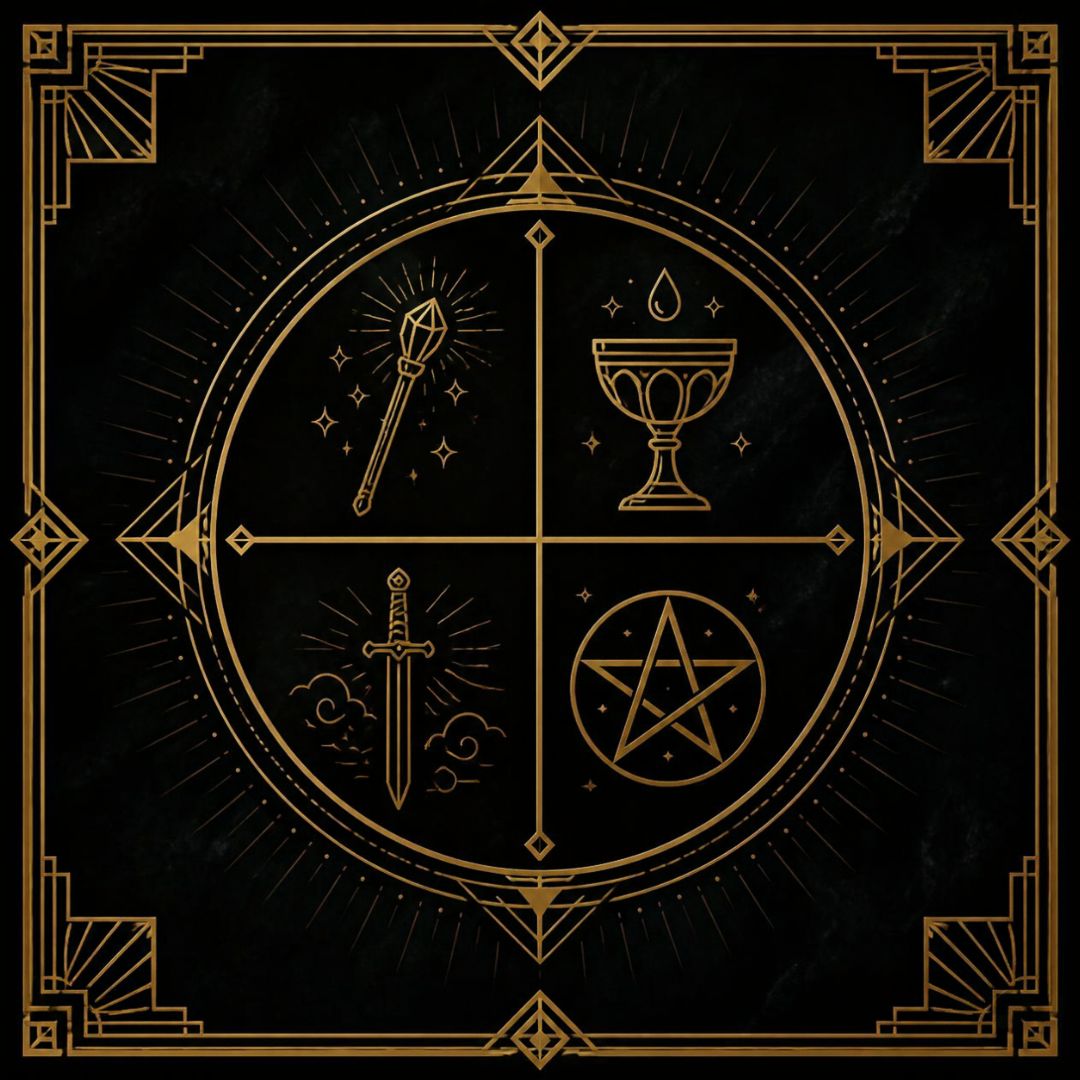
Every tarot deck, regardless of art style, is built on an elemental foundation. Instead of memorizing 78 individual definitions, you only need to understand the four energetic engines behind the minor arcana:
Suit | Element | Core Domain | Real-World Expression |
|---|---|---|---|
Wands | Fire | Inspiration, Drive, Momentum | Action, creative spark, burnout, willpower |
Cups | Water | Emotion, Relationships, Intuition | Feelings, connection, emotional boundaries |
Swords | Air | Mind, Truth, Communication | Overthinking, logic, conflict, clarity |
Pentacles | Earth | Physical World, Wealth, Structure | Money, career, health, tangible results |
When a card lands in a reading, look at the suit first. That immediately grounds the conversation into one of four real-world categories before you even look at the finer details.
2. The Number Engine: How Numerology Powers the Minor Arcana
Instead of memorizing 10 different meanings for 4 different suits (40 cards right there), combine the suit's element with simple numerology. Numbers represent the progression of any cycle:
Ace (1): The Raw Spark (New beginning, potential, seed moment).
2: Dual Forces (Balance, choices, partnership, tension).
3: Initial Growth (Expansion, collaboration, first tangible result).
4: Structure & Stability (Foundation, boundaries, standing still).
5: Conflict & Pivot (Disruption, testing, challenge, shift in energy).
6: Harmony & Flow (Recovery, victory, giving/receiving balance).
7: Evaluation & Faith (Patience, internal reflection, strategy).
8: Mastery & Momentum (Skill building, speed, intense focus).
9: Peak Integration (Near completion, independence, threshold moment).
10: Final Culmination (End of cycle, absolute completion, generational payoff or overload).
Example: 5 of Swords = 5 (Conflict/Disruption) + Swords (Mind/Communication) = Disagreements, mental tension, or winning an argument at a cost. Zero guidebook required.
3. The Major Arcana: Reading the Fool’s Journey
While the Minor Arcana tracks day-to-day life details, the 22 Major Arcana cards represent macro-level spiritual archetypes and major life shifts. To decode them effortlessly, view them as three distinct acts of The Fool’s Journey:
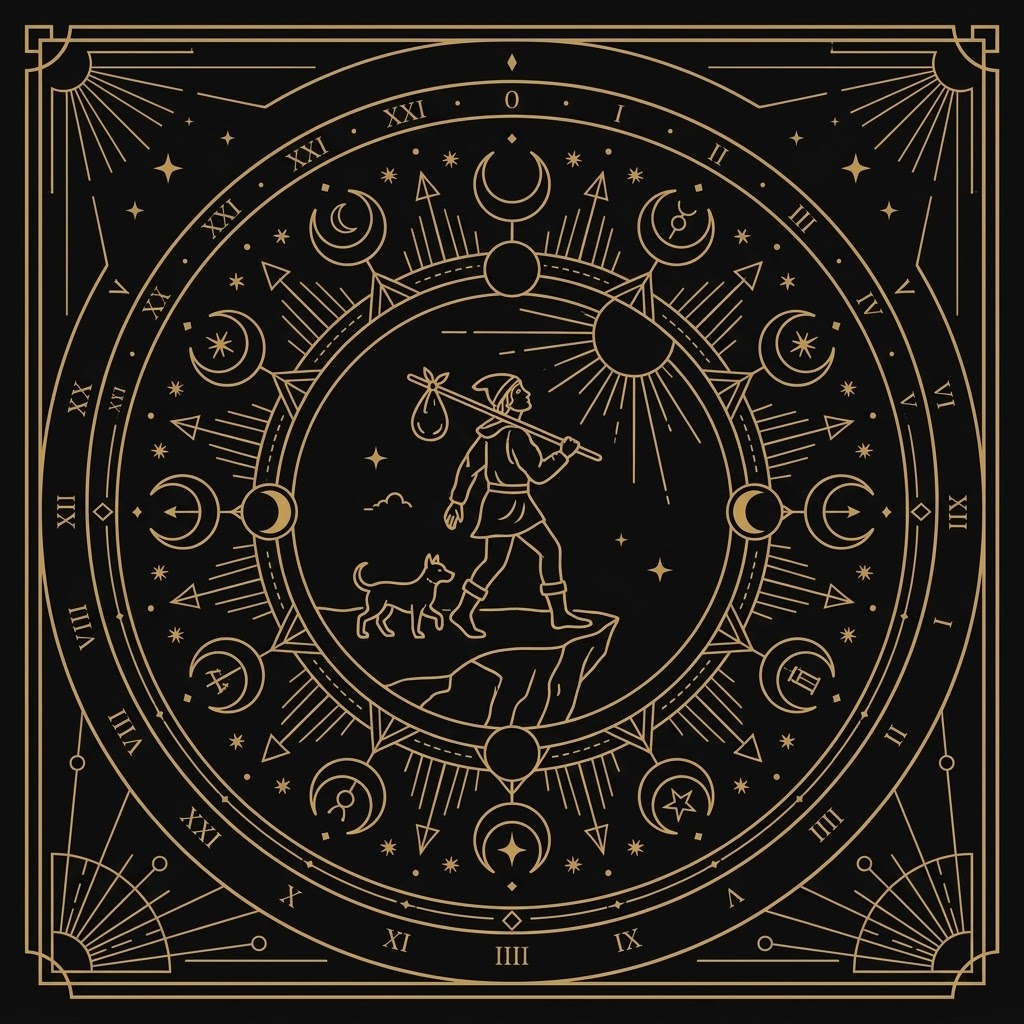
Act I: The Material & Identity Realm (Cards 0–7): From The Fool embarking blindly to The Chariot seizing external control. This phase is about ego building, physical mastery, relationships, and learning real-world rules.
Act II: The Internal & Soul Realm (Cards 8–14): From Strength taming the inner beast through The Hermit and Death to Temperance. This phase forces internal transformation, releasing old identity structures, and confronting hard truths.
Act III: Cosmic & Spiritual Realignment (Cards 15–21): From breaking free of The Devil and surviving The Tower to ascending through The Star, The Sun, and achieving total integration with The World. This phase represents universal awakening and stepping into your highest timeline.
When a Major Arcana card appears in a reading, it instantly signals that the situation isn't just a daily annoyance, it is a pivotal, structural milestone on your personal journey.
4. Apply the 3-Second Observation Rule
When you flip a card, give yourself 3 seconds to identify the dominant visual trigger before your analytical brain steps in to criticize it. Ask yourself three instant questions:
Where is the motion? Is the character rushing forward, standing still, or feeling trapped?
What is the direction? Is the figure facing left toward the past, right toward the future, or looking directly at you?
What is the contrast? Is the scene open and illuminated, or cluttered and heavy?
That first immediate flash of perception is where raw intuitive clarity lives. The moment you pause to look up a page in a book, you hand control over to your logical mind, overcomplicating a message that was already clear.
5. Fast-Track Your Readings With a Single Reference Sheet
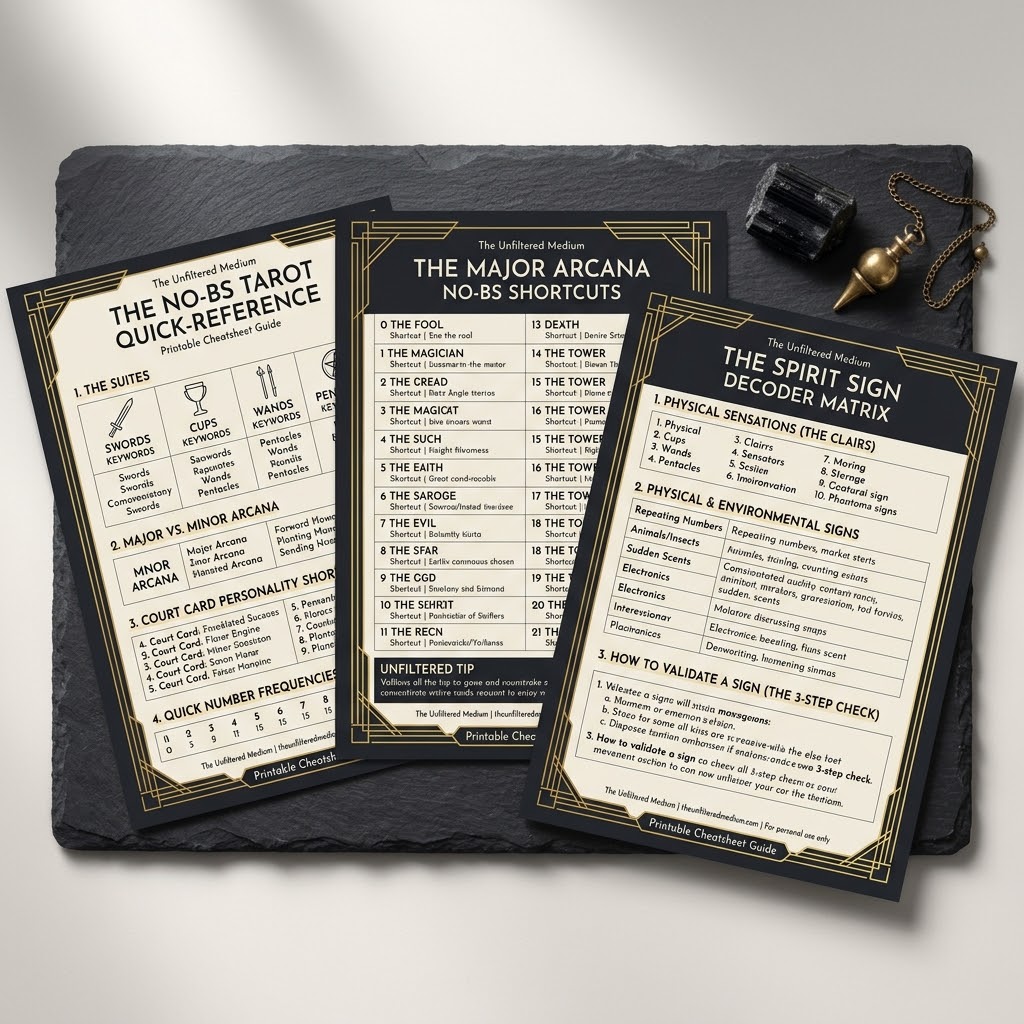
If you want a simple, grounded system to quickly reference card suits, numerology progressions, and court dynamics without flipping through books during a read, keep a single, streamlined cheat sheet beside your deck.
Instead of dense paragraphs, a cheat sheet gives you clean visual anchors on a single page, letting you stay immersed in the read while giving your logical brain the quick reassurance it needs.
⚡ Need a quick reference tool for your daily pulls? Check out The $3 No-BS Tarot Sign Decoder Cheatsheet in The Shop. It collapses suits, numerology, court cards, and physical signs into a clean, pocket-sized printable layout.
6. Ready to Take Your Readings Deeper?
Once you stop overcomplicating individual card pulls, the next step is learning how cards interact with one another, recognizing physical spirit signs, mapping spread architecture, and grounding your intuitive hits into actionable guidance.
If you are ready for a comprehensive breakdown of card mechanics, spread architecture, and grounded intuitive validation, explore our complete ebook guide: The Unfiltered Guide to Decks, Grounding, & Intuitive Structure. It is designed to take you from overthinking beginner to confident, grounded reader with zero fluff.
Raw Intuition. Real Tools. No Fluff.